The Caravan, Camping and Motorhome Show is over for another year, but what a show it was.
The February show is the smaller of the two bi-annual events held at the NEC, and while I’ve been to four October NEC Shows, this was only my second trip to its smaller counterpart. However, I quite liked the more compact nature of it, not only for my feet (the advice to “wear comfortable shoes” may almost feel clichéd by now, but it doesn’t make it any less true), but also because it made I felt like I could legitimately say I’d been around most of the stands.
That’s not to say I don’t love the vibrancy of the October show, but I like the change in pace between the two, giving them both their own identities. And don’t mistake a smaller scale for meaning there wasn’t plenty to see either. There was the return of an old face, two rebrands, plenty of launches, and even a motorhome that made us check we hadn’t stepped into a caravan.
Here, I’m sharing my takeaways from the 2026 Caravan, Camping and Motorhome Show.
1. It’s Ace to be back
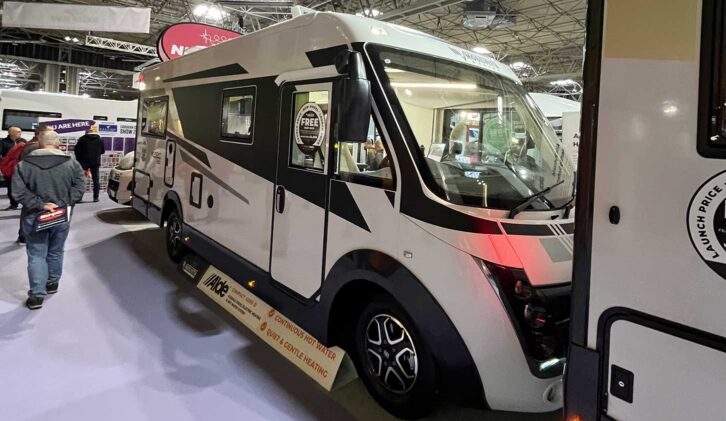
One of my most anticipated launches at the Caravan, Camping and Motorhome Show was from Ace. For those of you who don’t know, the brand had previously belonged to ABI, which now only makes holiday homes, and was then purchased by Swift in the early 2000s. For the manufacturer’s return, the models are being built at the Swift factory in Cottingham, although Ace is being run completely separately, with its own dealer network that currently numbers 20.
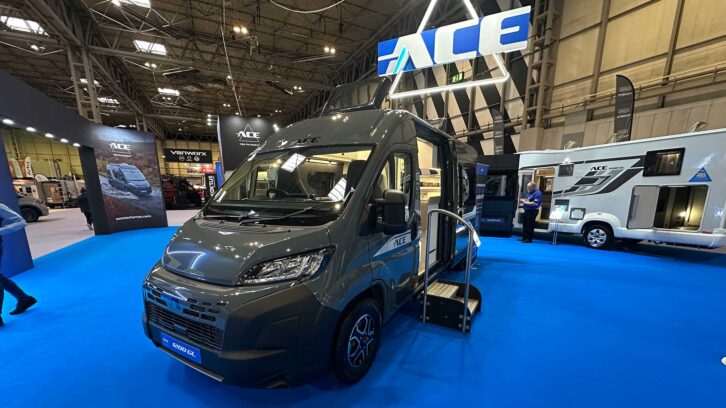
The stand was probably one of my favourites at the show, and it certainly caught the attention in Hall 5, whether you were going down the stairs or coming in through the entrance. There’s also a different base vehicle depending on whether you opt for a campervan (Fiat Ducato-based) or a motorhome (Ford Transit-based), which our Reviews editor, Peter Baber, told me isn’t something you always see.
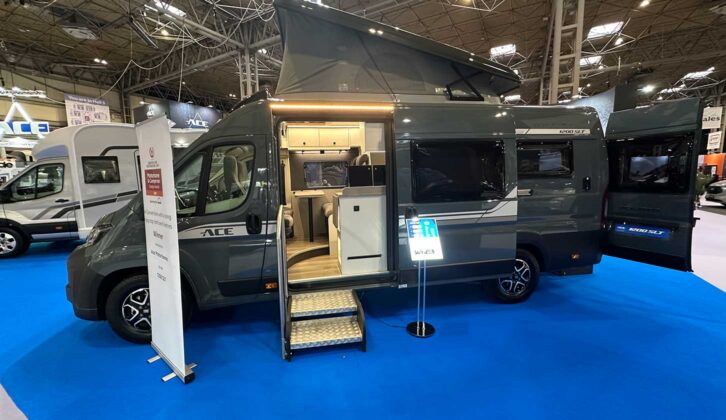
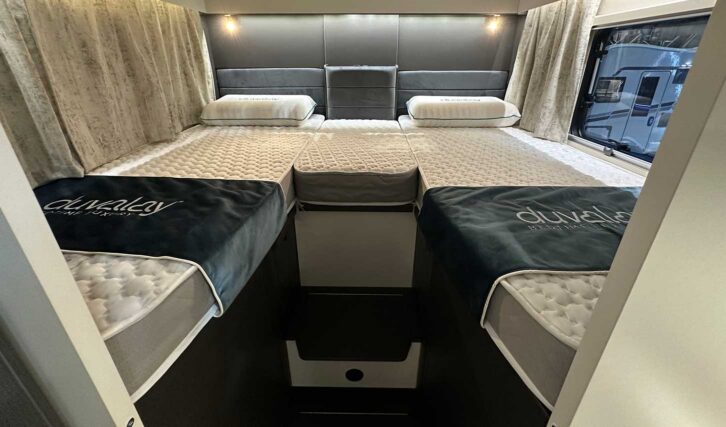
Ace had six models on display, including its full three-model line-up of campervans, the 6.36m-long 1200 RL (with a rear lounge), the 1200 GL (with a transverse bed) and the 1200 SLT (with fixed single beds). Prices range from £59,805 to £60,805.
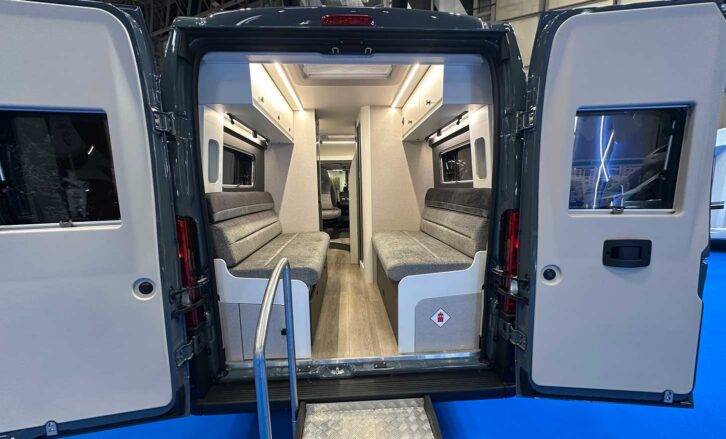
A two-berth as standard, there is the option of a rising roof as a £5,500 option if you decide you want an extra two berths, with an 8-speed auto gearbox as a further option.
There were also models from its 7.8m-long, Ford Transit-based low-profile coachbuilt range, including the 1500 SL, which has fixed single beds, and the 1500 DB, which has a rear island-bed. Each one comes with a front lounge with a foldaway table and are two-berths as standard. Prices range from £64,995 to £66,905.
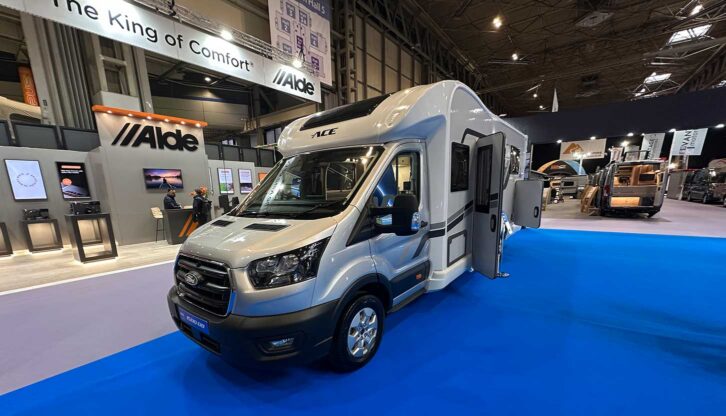
The range also includes the 1500 GL, with a transverse bed, while a fourth model, the 1500 ET, which comes with an end washroom, is also set to join the line-up. However, we will have to wait until the summer to see what it looks like. The 1500 ET will be unique within the coachbuilts as it is the only one which does not come with an optional pedestal table, which can be lowered to create an extra double bed.
What I particularly like is that Ace has positioned itself as an entry-level range – I’ve seen people say they feel a bit priced out of the market these days, so it can only be a good thing to see new launches which cater to those looking for budget campervans and motorhomes.
Plus, a little feature I was particularly pleased to see – two drainage holes in the shower, something you don’t always get in entry-level models.
2. There was a new look for two familiar names
2026 has seen Joa Camp rebranded as Joa by Pilote, with the results on display on both the Durham Caravan and Motorhomes and the River Motorhomes stands.
As part of the change, Pilote is now more evident in the branding. While the campervan line-up itself is unchanged, it is coming with a refreshed interior and exterior, with the new logo looking stylish in its simplicity.
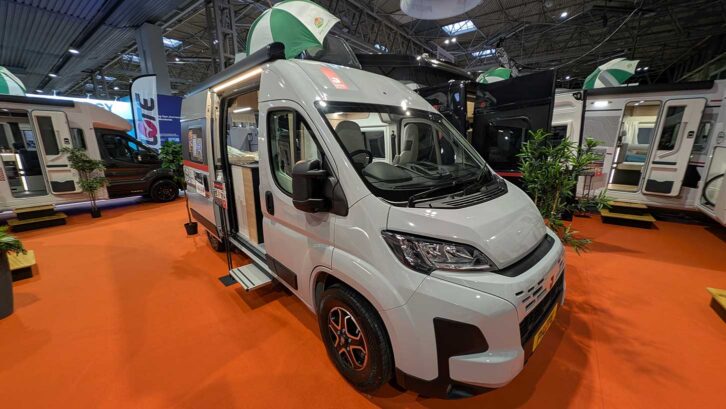
However, a new coachbuilt was on display, in the form of the 75QB, a 7.4m-long four-berth with an in-line island bed and an L-shaped front lounge. This joined the Joa 54G on the Durham Caravan and Motorhomes stand, while the Joa 70T and 60G could be seen on the River Motorhomes stand.
Joining them in rebranding was Kampa, a name many of us will know when hunting for accessories, as they have repositioned themselves as tent and shelter specialists. Their stand included a range of driveaway awnings, a new take on the traditional A-frame tent, and the MOD 250, which can either be used on its own or as a series of modules.
3. There was a motorhome that made us check we hadn’t stepped into a caravan
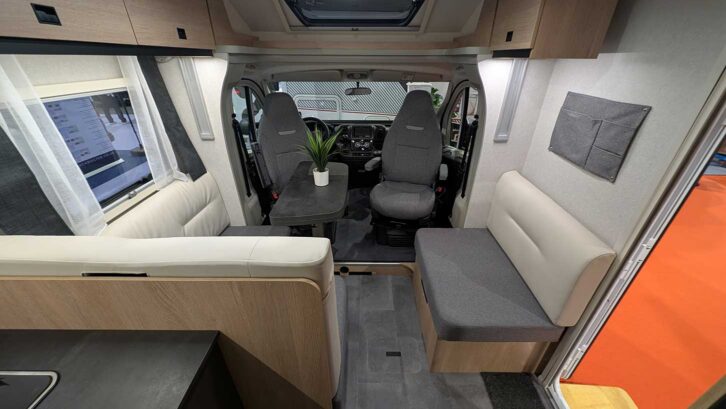
Well done, Bailey – you actually made us have to double-check we’d stepped into a motorhome instead of a caravan. It was one of the new additions to the Autograph line-up, the 79-4F, which managed this, with its layout quite reminiscent of a caravan, in the opinion of Practical Motorhome’s editor, Sarah Wakely.

The 7.95m-long motorhome comes with an L-shaped front lounge where twin-travel seats can be turned into a double bed, a single-level French bed (1.32m x 1.91m), and an end washroom.
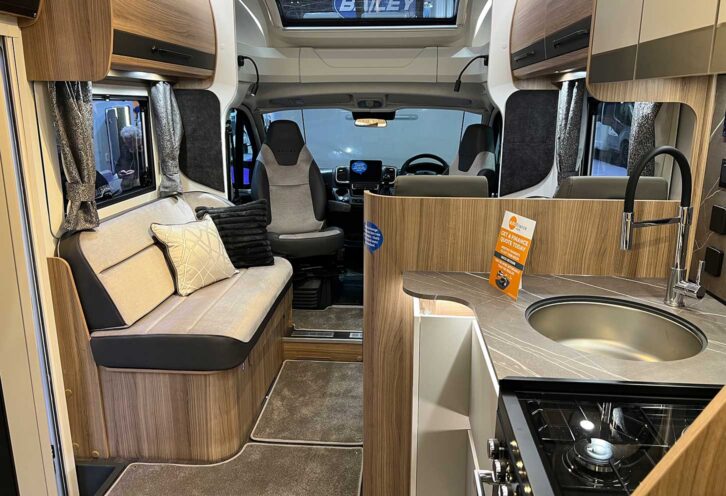
However, if it’s one you’re considering, you’d need to ensure you have a C1 licence, due to an MTPLM of 4500kg. You do, however, get a large payload of 1068.5kg, and a spacious rear garage too. Its OTR price is from £92,749.
4. Designers are making motorhomes feel more spacious than ever
And no discussion on the spacious interiors designers are creating would be complete without mentioning the off-white upholstery choices that are being made by brands. Is it just me, or are there more now than ever?
I’m very much a big fan of clean, contemporary interiors in day-to-day life, so seeing the increasing amount of motorhomes with this bold, creamy white upholstery is a trend I’m very much here for. It helps to brighten the interior and creates a feeling of space, which, in the confines of a motorhome, is always welcome in my book.
Mobilvetta is a brand that is doing this particularly well, continuing the trend it started with the Kea Kompact 55 (our pick for the best motorhome under 7m at the Practical Motorhome Awards 2026) at the October Show through its Kea 80 and K Yacht 80, a coachbuilt and A-class respectively, which were both on display on the Marquis Leisure stands.
I like how the combination of the upholstery and the placement of the windows and Heki really create an airy interior in the two models, and, despite dropdown beds over the rear lounge and the cab in the two motorhomes, a feeling of space is maintained throughout. The washroom’s swinging wall to create a nice-sized shower is a welcome touch, too.

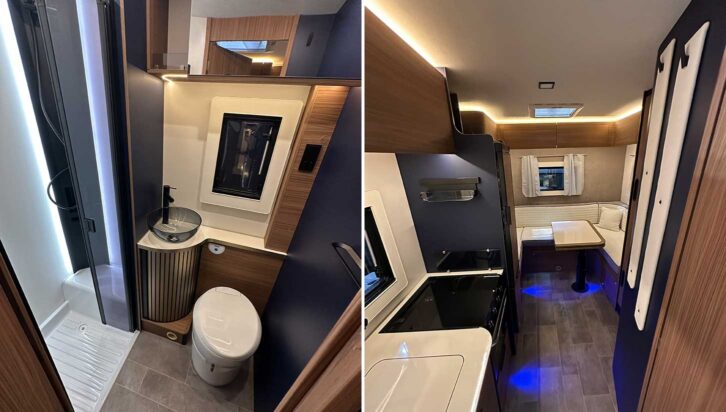
And Rimor continued to impress me, as well. At the October NEC Show, it was the Sailer 56 Plus, and this time, it was the Super Brig Suite that I stepped inside and found myself saying “wow” about. It’s only 6.97m long, but the space you get in the rear lounge and washroom is really quite astounding.
I thought the new Rapido C66 Optimum Line managed to feel spacious inside as well, despite a width of only 2.17m, thanks to the bright upholstery and woodwork used throughout. The Fiat-based motorhome has an OTR price tag of £81,600, and I also thought it had a generous level of equipment.
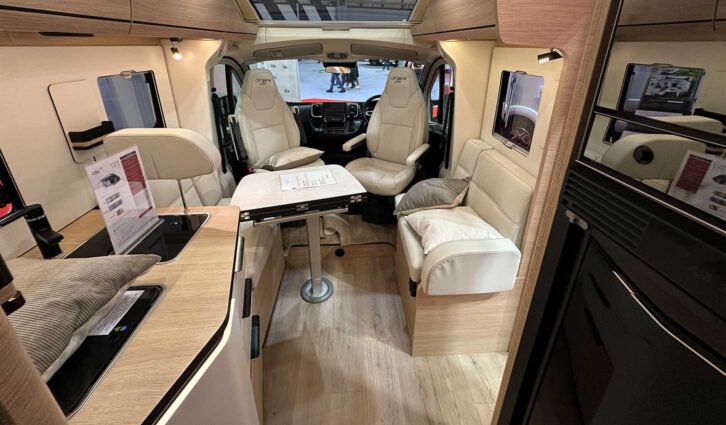
Spec includes a 149-litre compressor fridge, a 150W solar panel, a 150Ah lithium battery, diesel heating, an automatic gearbox, a 2000W inverter, Truma Combi 6 EH diesel heating, and an oven. At 6.99m long, the motorhome comes with fixed single beds at the rear, plus it provides a payload of 475kg.
Other brands to catch my eye with their upholstery choices included Roller Team, with the Pegaso 590, Auto-Trail, through the Frontier Comanche and the Imala 736, and Rapido’s 850F.
5. There was an “A-class corner”
If the NEC were a Monopoly board, Hall 1, with brands such as Carthago, Rapido, and Morelo having motorhomes on display, would undoubtedly be Park Lane. Or perhaps it would be renamed “A-class corner”, in this special Caravan, Camping and Motorhome Show edition of the game.
There were plenty of A-class motorhomes on display here, particularly on Carthago’s stand, as you would expect from a manufacturer of luxury motorhomes. And what discussion would be complete without mentioning the three Morelo motorhomes on display on the Premier Motorhomes stand?
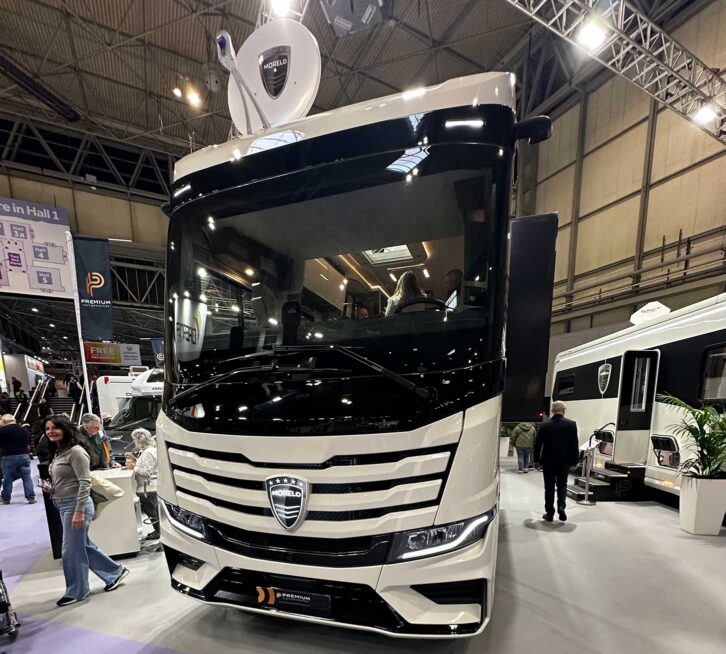
The most expensive of these was the Palace Liner S-Way 103 SGB, which had a price of £564,820 and comes on an Iveco S-Way base vehicle. The model on display came with a wide selection of equipment to make touring even more luxurious, including the EMPIRE style double glazed projecting windows (£13,145), a dishwasher (£2,445), a hydraulic levelling jacks system with automatic levelling (£8,760), an EMPIRE rain shower (£955), four 150W solar panels (£3,415), a TV package which included a 39-inch television and a 27-inch TV (£6,395), and leather upholstery (£4,115).
On second thoughts, maybe “A-class corner” should be renamed “aspirational corner”…
6. Has the idea of off-gridding and off-roading ever been more appealing?
Something the industry is doing very well at the moment is designing campervans that suit the more adventurous, ensuring you don’t have to rough it if you want to go off-road.
The February Show had a number of such campervans on display, with Mega Mobil and Kaktus just two of the converters exhibiting. There were also three new models that particularly caught my eye that were debuting for how well suited they would be to off-grid campervanning and off-road adventures.
First up was the Onyx Summit 2.0. Coming on a MAN TGE, the 2.0 is a two-berth which comes with BF Goodrich all-terrain tyres, a 480w off-grid solar set-up and AquaHot hydronic heating which provides constant hot water and, should you so desire, underfloor heating as an option.
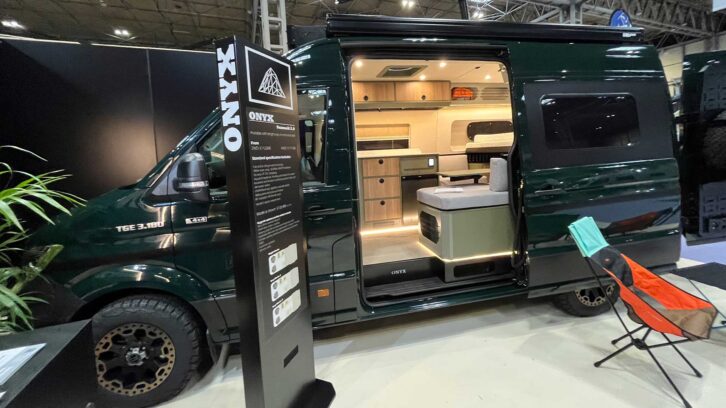
Something which stood out was the innovative pop-up shower inside, too, while the beds can come in either a transverse or lengthways set-up. You can also enjoy gasless cooking in it if you’re after some eco-friendly campervanning, thanks to a two-burner induction hob.

The van is available either as a two-wheel drive (from £112,000) or as an all-wheel drive (from £117,500).
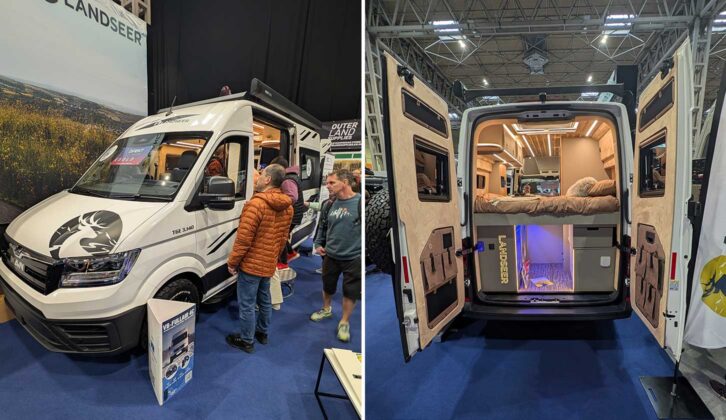
Then there was the Landseer Artemis too, another MAN TGE-based campervan and the first on the base vehicle from the converter. It’s a two-berth (from £99,800), although it has an optional pop-top roof (£9,200). For fans of off-gridding, it comes with a 460Ah lithium battery, an inverter, a Victron inverter, a solar charger and a battery charger, while it has a Trelino slide-out composting toilet too.
Joining them in launching these campervans for the more adventurous was Bailey, which had the second addition to its Endurance range, the E62, on its stand (prices start from £66,999).
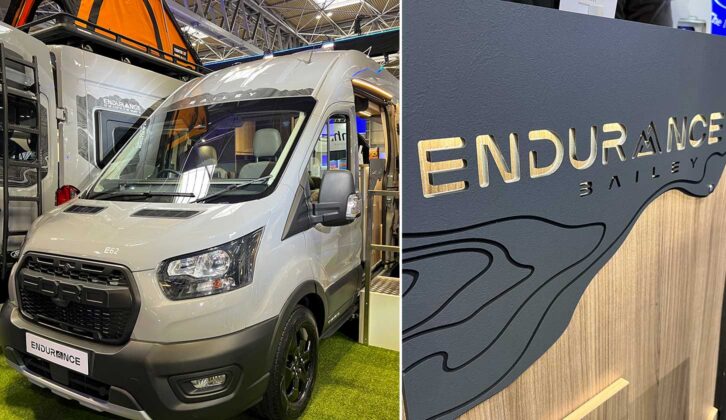
Coming on a Ford Transit Trail base vehicle in ‘Grey Matter’, it has Truma Diesel Combi D4E heating, Grade III insulation, two 80Ah AGM leisure batteries and a 130-watt Truma solar panel. There is also a wide range of optional extras to kit it out with, including the Adventure Pack, which adds a Rhino roof rack and ladder, off-road roof-mounted lighting, and two 100W solar panels., and, if you opt for this, a TentBox roof tent is a further option, too (£2,790).
Each one also, quite frankly, looks cool. Not a major factor when you’re choosing the best campervan, I know, but it certainly doesn’t hurt either.
7. There were two VW Crafter campervans
Volkswagen Crafter-based campervans may be a little bit unusual, but there were two new eye-catching vehicles on this base vehicle on display at the NEC too.
This included the Aura 6EB, a 5.99m-long campervan with a transverse bed at the rear. Inside, you can get leather upholstery in a choice of four different colours, and you may or may not be surprised to hear that I loved the vivid orange the model on display came with.

It reminded me of the colours used in the Laika Kosmo Supremos from the October Show.
There’s further customisation too, with four floor finishes and 10 locker door shades to pick from, allowing you to really personalise it. Prices start from £96,995 OTR, and it comes with a 100Ah lithium battery, a Fiamma awning, an Eberspacher diesel heating, and a nice-sized shower.
Joining it was the Rolling Homes Darwin, which was originally released as a 6.8m-long model. However, the 6m campervan still manages to maintain a spacious feeling, as well as provide a rear bathroom and storage space in a garage.
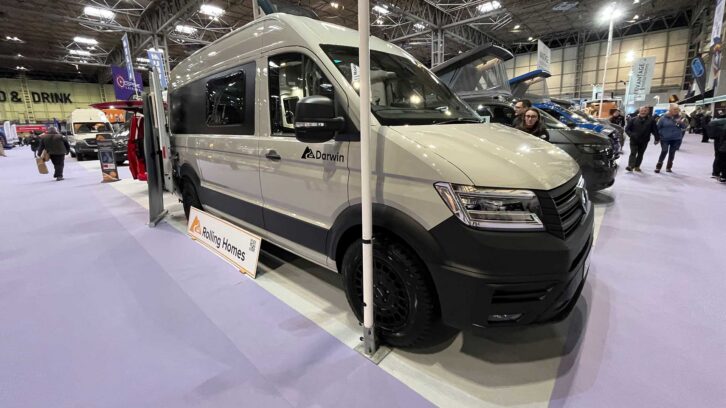
Plus, the gas-free model comes with a 300Ah lithium battery, a 320w solar panel, and a 3kw converter. Rolling Homes was also sharing details about a new hybrid campervan on the VW Multivan as well.
After all that, roll on the October show!
If you’ve enjoyed reading this article, why not get the latest news, reviews and features delivered direct to your door or inbox every month. Take advantage of our brilliant Practical Motorhome magazine SUBSCRIBERS’ OFFER and SIGN UP TO OUR NEWSLETTER for regular weekly updates on all things motorhome related.