The year 1956 saw the combined launch of a revolutionary motorcaravan base vehicle from two of our (linked) motor manufacturers, Austin and Morris.
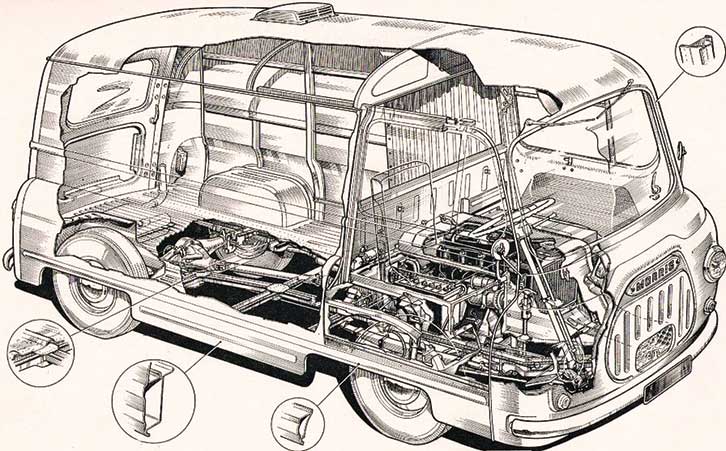
It represented a brace of ‘firsts’, namely the first BMC (British Motor Corporation) joint Austin/Morris design-and-build venture, and the first British ’van of unitary construction. For those who were looking at buying a motorhome at the time, this meant it featured forward control with the engine sitting between the driver and passenger, and the cab entrance steps located ahead of the front wheels.
Motive power is courtesy of the dependable ‘B’ series petrol engine – at launch 1500cc/42bhp and later 1600cc/61bhp. A BMC naturally aspirated 1500cc/42bhp diesel engine became available in 1961. The rear wheels are driven via a four-speed gearbox, initially with column gearchange. The commercial variants were also known as the ‘Omni series’ – Omnivan, Omnicoach (minibus) and Omnitruck (pickup).
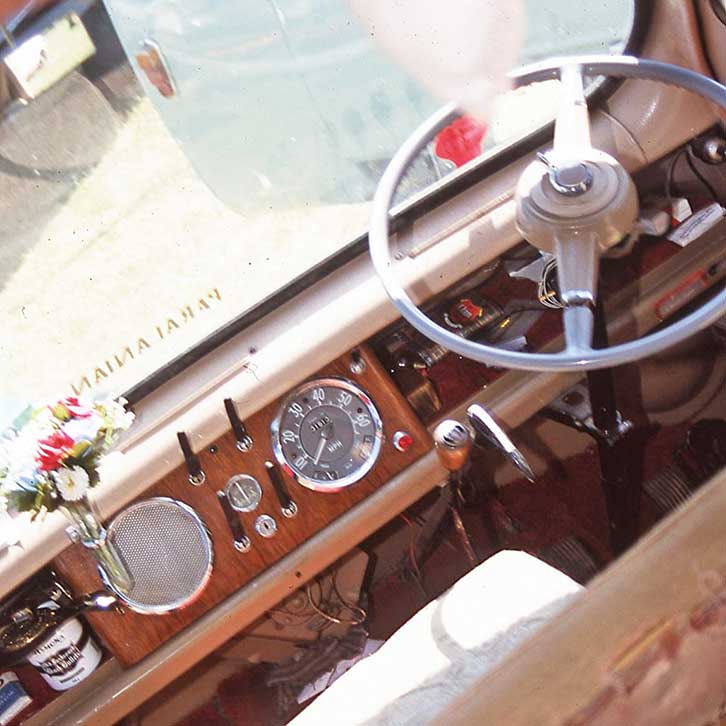
The differences between the Austin and the Morris are limited to just the frontal treatment, nomenclature and badges. The Morris has a lozenge-shaped grille with vertical bars, the Austin sports a rectangular shaped one with horizontal bars.
They were very popular with British converters, and a surprisingly large number of 152/J2–based motorcaravans still exist, both in preservation and in-use.
The Bluebird Highwayman
The Bluebird Highwayman did more to popularise coachbuilt motorcaravanning than any other single model.
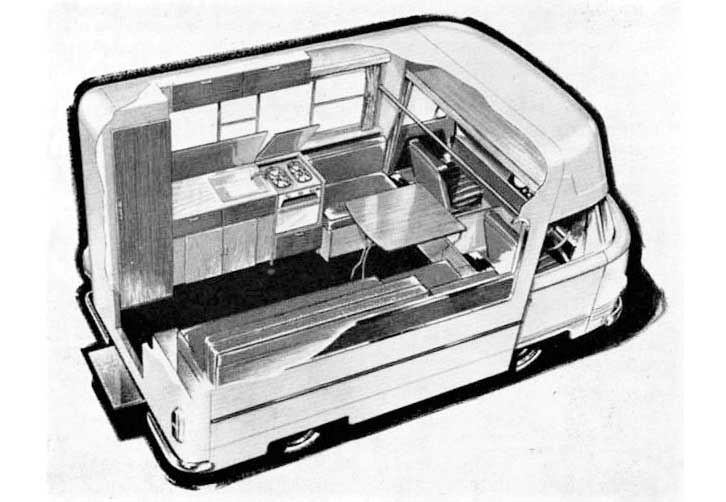
The Calthorpe Home Cruiser
Maurice Calthorpe was the first in the UK to patent a rising-roof. It is pictured below crowning his Calthorpe Home Cruiser.
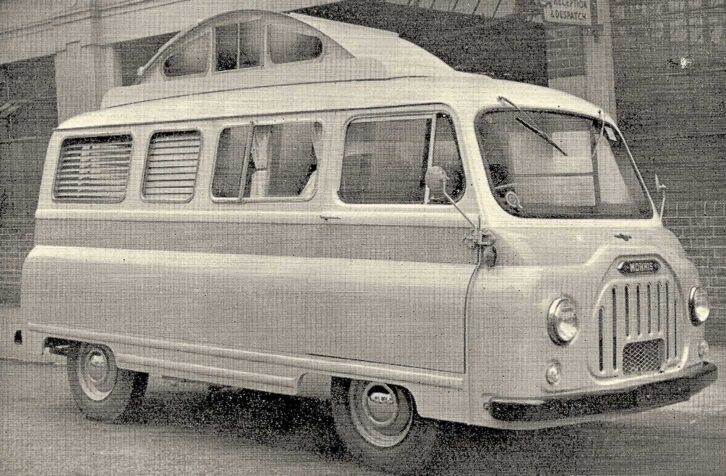
The Paralanian
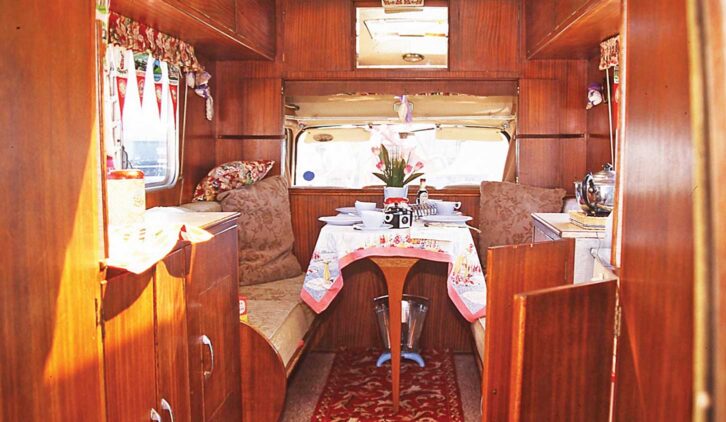
The highly-desirable Paralanian. They were referred to as ‘the Rolls-Royce of motorcaravans’, because of their high quality, rather than to any links to the luxury car manufacturer.
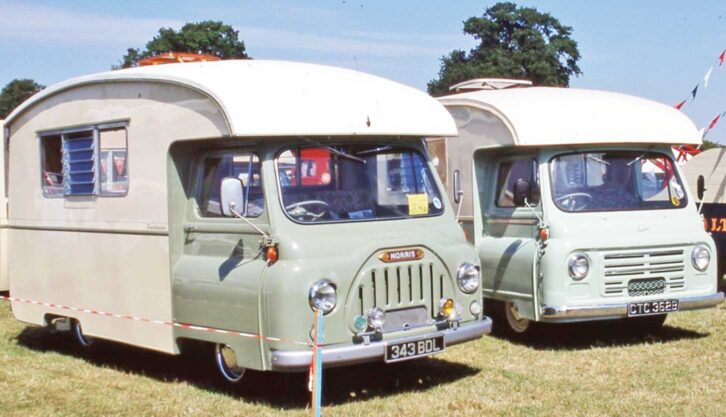
The Paralanian from Central Garages, Parry Lane (hence the name), Bradford, was a masterpiece of British coachbuilding and cabinet making. These luxury motorhomes were pricey, though – about the same as a semi-detached house in one of the fancier parts of London!
The Dormobile
Advertised as being ‘affordable for continental holidays’, this Dormobile conversion was conceived by Martin Walter of Folkestone. Both the Austin and Morris variants were used.
Featuring their famous ‘candy-stripe’ canvas-sided elevating roof and offering six travel seats (no safety belts) and four sleeping berths, these were available from £877-17-6 (877 pounds, 17 shillings and 6 pence).
They sold steadily but were overwhelmed by the huge popularity of the Dormobile on Bedford’s CA.
The 152/J2 motorcaravans
Yet another first – or if not the first, then these 152/J2 motorcaravans were certainly very early adopters of ‘lay-on colour’ in advertising images.
The original images were taken in black and white and then a coloured frame or ground cover was added. Sometimes motorcaravan body parts were highlighted instead. It was a sort-of halfway house between monochrome and full colour photography.
It was rumoured that BMC helped converters with the extra cost of this type of advertising in an attempt to poach sales from Ford’s Thames 400E and Rootes Group’s Commer PA/PB.
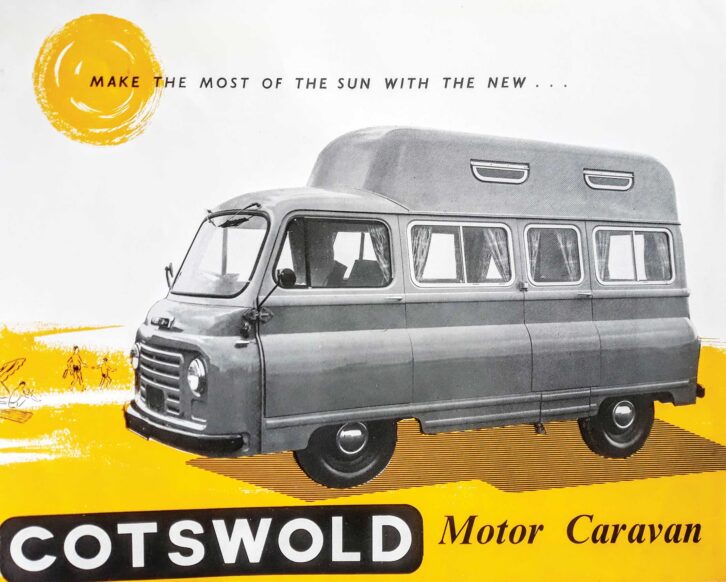
Better remembered today for their classy coachbuilts, Cotswold Coachcraft of Gloucester also produced van conversions, including this one with their own moulded GRP ‘bread
loaf’ high-top.
Below it is another Highwayman image. This time it’s of the exterior.
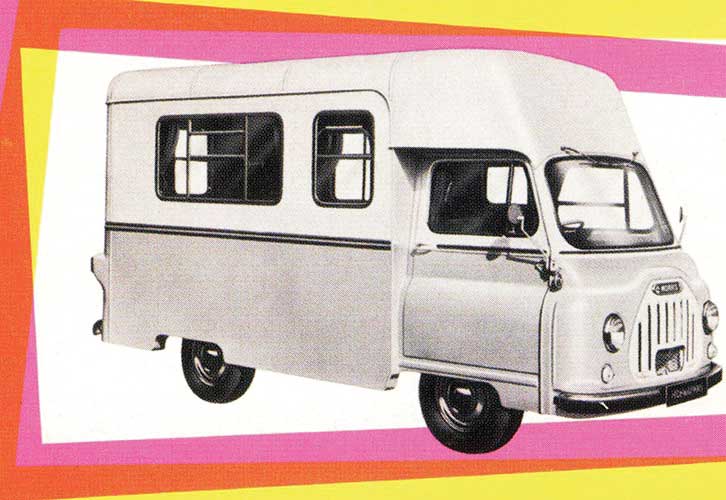
They were a hugely popular product of Bluebird Caravans in Poole, which morphed into CI Motorhomes, then into Autohomes, and finally (after bankruptcy) a management rescue partnership formed Herald. All at the same location!
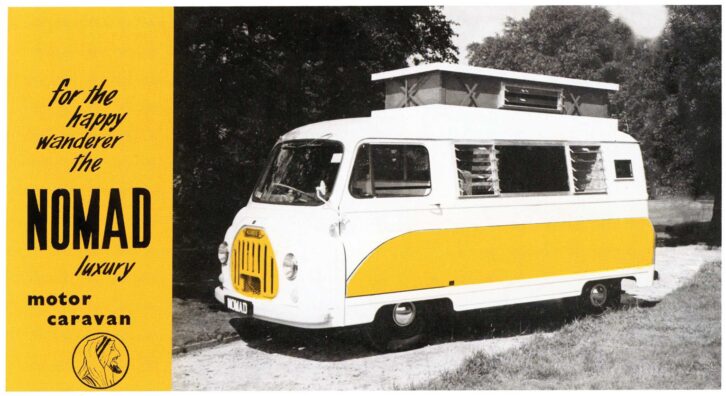
Pictured above is the Nomad from Car Campers of Bolton. A Car Camper design signature was a practical and attractive black and white chequered Marley tiled floor.
For those of you who are interested in buying an older ‘van now, take a look at our picks for the best used motorhomes to help you find the model that’s right for you.
If you’ve enjoyed reading this, why not get the latest news, reviews and features delivered direct to your door or inbox every month. Take advantage of our brilliant Practical Motorhome magazine SUBSCRIBERS’ OFFER and SIGN UP TO OUR NEWSLETTER for regular weekly updates on all things motorhome related.