Recently, as the weather has finally started to cool down a bit and we head towards the winter season, I have been thinking a lot about ‘van tyres.
I’ve also been thinking about how important it is to keep an eye on our motorhome tyres, no matter what the age of the vehicle.
This assertion is upheld by the number of motorhomes I’ve seen over the years with cracking sidewalls and tyres of 10 years or more in age.
We really need to get on top of this subject – the tyres are the only part of the vehicle that should be touching the road, and even on a small motorhome each tyre can carry over half a tonne in weight. Add in the forces of driving, braking and steering, and you can hopefully see how important they are.
Tyre inflation is very important as well: an over-inflated tyre may give less grip than a correctly inflated one, but an under-inflated tyre is much worse. As the tyre rolls along, the rubber and wire reinforcing structure flexes – an under-inflated tyre will flex a lot more, and generates a lot of heat in the tyre carcass.
This heat can build up to a point where the structure of the tyre starts to fail, and once it starts, it’s game over in a very short time. Take a typical motorhome tyre as an example: 225/75/16 size, which is 225mm wide at the tread, 75% side profile height and fitted to a 16in rim.
When this tyre is inflated correctly to 65psi (4.5 Bar approx) and running at 60mph, it has a huge energy potential and if it suffers a rapid deflation (blow-out) the result is similar to a hand grenade exploding. It will, at the very least, do a significant amount of damage to the bodywork, wheel arch liner, possibly the fridge or furniture that sits above it – and in extreme cases, even worse.
Winter rubber
While we’re on the subject: as winter approaches, let’s talk about winter motorhoming and four-season tyres. Most tyres bought in the UK are summer or three-season tyres, designed for mileage, grip and rain performance. Their rubber compound will be harder, to provide good mileage, and the tread pattern will be designed to remove water from between the tyre and the road.
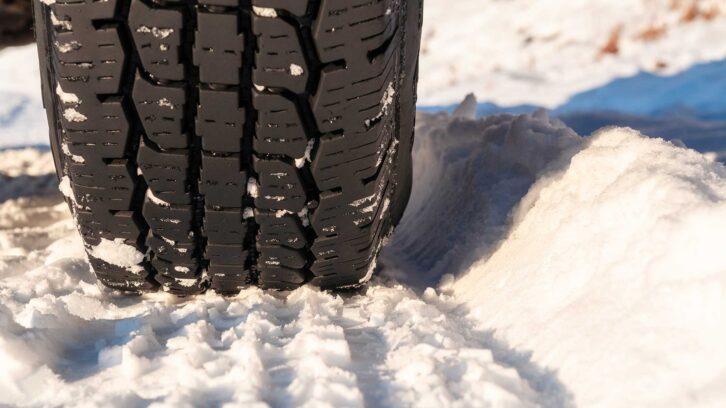
Winter tyres are a softer compound, to stay supple in lower temperatures. This will inevitably lead to lower mileage as softer rubber wears out more rapidly. The tread pattern is different, too – typically a more open block pattern, giving bigger grooves for clearing snow rather than rain.
The downsides of winter tyres are increased wear and of course, the cost of a second set of tyres (and perhaps the wheels to put them on). Using winter tyres in summer can cause them to overheat, which will reduce their grip and speed up their demise.
Four-season tyres are designed to give better cold-weather performance than summer tyres, but this also means lower performance in summer conditions.
Bear in mind that many countries in Europe require the use of winter tyres during the snowy seasons (typically November to March), but this varies, so check before you head abroad for your winter break.
Don’t miss what we have to say about motorhome tyre pressure, either.
Images: Getty Images
Future Publishing Limited, the publisher of Practical Motorhome, provides the information in this article in good faith and makes no representation as to its completeness or accuracy. Individuals carrying out the instructions do so at their own risk and must exercise their independent judgement in determining the appropriateness of the advice to their circumstances and skill level. Individuals should take appropriate safety precautions and be aware of the risk of electrocution when dealing with electrical products. To the fullest extent permitted by law, neither Future nor its employees or agents shall have any liability in connection with the use of this information. You should check that any van warranty will not be affected before proceeding with DIY projects.
If you’ve enjoyed reading this article, why not get the latest news, reviews and features delivered direct to your door or inbox every month. Take advantage of our brilliant Practical Motorhome magazine SUBSCRIBERS’ OFFER and SIGN UP TO OUR NEWSLETTER for regular weekly updates on all things motorhome related.