It’s quite simple – if your motorhome spends several weeks, or even months, at a time standing still, the mechanicals will suffer.
Brakes will rust, motorhome tyres can undergo abnormal degradation, the oil in the engine can emulsify with moisture from the air, and all engine components will be starved of lubrication, because it’s had a long time to drain away from the bearing surfaces.
I’ve even known one car, many moons ago, seize up after being left outside for several months over winter, because moisture had condensed in the cylinders and rusted up the bores.
We serviced a 20-year-old motorhome and had to replace the cambelt and tensioners. The ’van had a relatively low recorded mileage of 67,000, so you’d be forgiven for thinking the belt wasn’t even due for another 13,000 miles – but the picture below tells a different story!
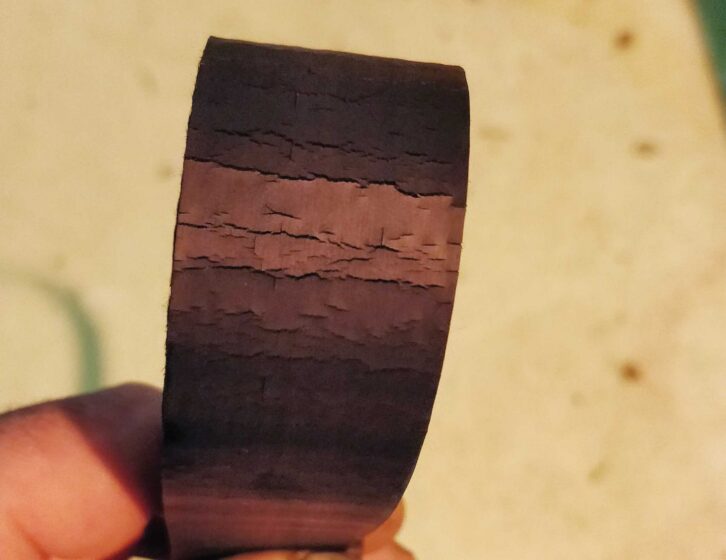
The belt exhibited serious cracking throughout, and would probably have failed in a relatively short matter of time, causing several thousand pounds-worth of damage. Timing belts need to be replaced on a time basis, as well as mileage.
Check brakes, inspect tyres
Motorhome brakes is another area that is often neglected, on the basis that the vehicle has covered few miles. Another recent service and MoT brought to light some heavily pitted brake discs and partially seized calipers, causing a brake imbalance and fluctuation that brought with it a failure on the MoT.
Again, despite the vehicle’s relatively low mileage of 39,000, new discs and pads were required, as well as a strip down of the calipers, to restore full braking efficiency.
We also often see tyres with severe cracking in the sidewalls, despite having loads of tread left – a direct result of the ’van standing around unused. I sympathise about throwing away four or more tyres with six or seven millimetres of tread on them, but these cracks are never going to heal up!
While we’re talking about tyres, don’t miss our guide to motorhome tyre pressure, either.
Heating systems and fridges
Most of the equipment in the habitation area also benefits from frequent operation and maintenance. Fridges and heating appliances are a case in point. Fridges require regular servicing of the gas burner and flue, at least annually, but more frequently if they are used extensively on gas.
The main problem with gas fridges is that the burner unit is quite exposed to the elements and can corrode very quickly. They’re also popular places for bugs and spiders to occupy, which causes poor combustion, leading to dangerous carbon monoxide production.
Motorhome fridges are very low users of gas – the typical fridge burner is 100-140W. This means the metering jet and its airholes are much smaller than those of bigger-output items, so it only takes a tiny bit of dirt to mess up the fuel-air mixture.
Most heating appliances have no specified service interval, requiring attention only if there’s a problem. But there are a couple of issues with these units. The first is obstructions in the air intake or exhaust flue, often caused by spiders or bugs. The old faithful Truma S3000 series, for example, can sometimes get spider nests in the flue, restricting the flow of exhaust gases and leading to poor flame structure and lifting off from the burner as the flame seeks oxygen.
Another problem is dirt in the air intake and spiders in the mixing tube (where the air and fuel gas mix before combustion). The air intake is usually underneath the ’van, and the grid inside can be blocked by a build-up of dirt and corrosion.
Take a look at our advice on how to maintain a motorhome cassette toilet too – it’s an important, if unappealing, part of ‘van life.
Images: Dave Newell
If you’ve enjoyed reading this article, why not get the latest news, reviews and features delivered direct to your door or inbox every month. Take advantage of our brilliant Practical Motorhome magazine SUBSCRIBERS’ OFFER and SIGN UP TO OUR NEWSLETTER for regular weekly updates on all things motorhome related.